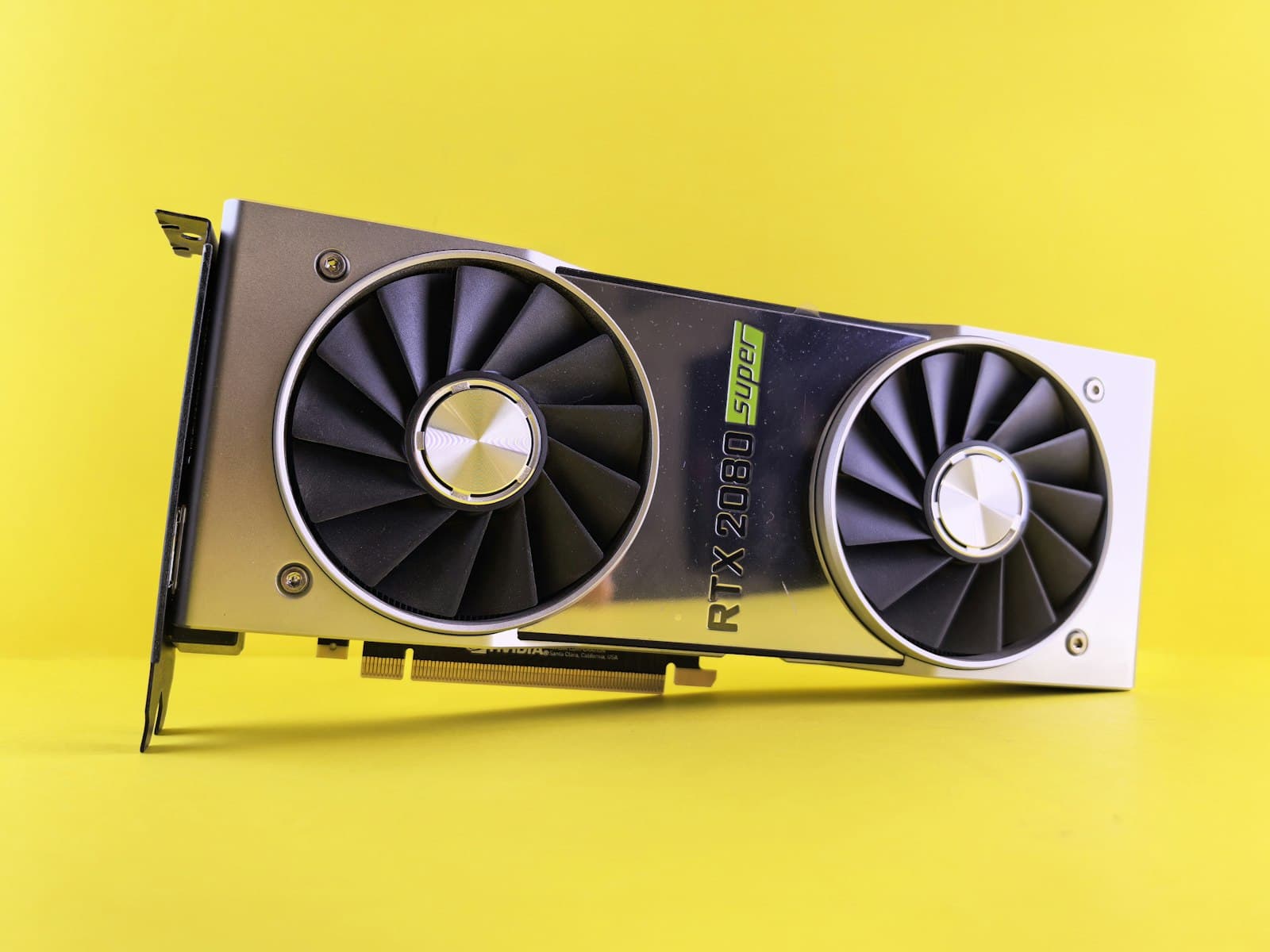
MIG vs full-GPU: when partitioning improves ROI for AI teams
For most AI teams in 2026, the real infrastructure question is no longer simply how to get more GPUs. It is how to extract more value from the GPUs already in the rack. That is why the debate around MIG vs full-GPU has become a finance question as much as an engineering one.
A full GPU can be the right answer for giant training jobs, latency-critical serving, and memory-hungry fine-tuning. But many production stacks do not look like that all day. They look like embeddings, rerankers, small and midsize LLM inference, retrieval pipelines, notebooks, feature generation, and experiments that spike for minutes, then idle.
In that environment, GPU partitioning can turn stranded capacity into usable revenue, faster iteration, and cleaner unit economics.
Why MIG vs Full-GPU Matters More in 2026?
The timing matters. Flexera reported in 2025 that 84 percent of organizations still struggle to manage cloud spend, cloud budgets exceed targets by 17 percent on average, and 33 percent now spend more than $12 million annually on public cloud. At the same time, Datadog found that GPU instances account for 14 percent of compute costs for organizations using them, up from 10 percent a year earlier, a 40 percent jump. When GPU spend rises that quickly, idle capacity stops being a technical annoyance and becomes a board-level ROI issue.
What Multi-Instance GPU Changes?
So what changes with MIG, or Multi-Instance GPU? On NVIDIA Hopper systems, MIG partitions one physical GPU into isolated instances with dedicated memory, cache, compute cores, and memory bandwidth.
How GPU partitioning works
NVIDIA says MIG can expose up to seven instances on a single GPU, support deterministic latency and throughput, and let inference, training, and HPC jobs run at the same time without the noisy-neighbor behavior common in simple time slicing. In plain language, MIG makes a shared GPU behave more like several smaller, predictable accelerators instead of one expensive asset that teams queue for and underfill.
Why isolation matters for ROI
That matters because isolated slices can reduce waste. Instead of assigning a whole GPU to a workload that only needs a fraction of the card, platform teams can provision smaller instances with more control. That can improve utilization, reduce wait times, and raise output per GPU purchased or rented.
The 2025 Shift that Changed the Economics
AI deployment patterns changed sharply in 2025. Databricks reported that organizations put 11 times more AI models into production year over year and improved deployment efficiency from a 16-to-1 experimental-to-production ratio to 5-to-1. It also found that 76 percent of organizations using LLMs choose open-source models, often smaller and more controllable than frontier closed systems.
Stanford HAI added another crucial signal in its 2025 AI Index. The inference cost of a system performing at GPT-3.5 level fell more than 280-fold between November 2022 and October 2024, while hardware costs declined roughly 30 percent annually and energy efficiency improved 40 percent per year.
The implication is striking. Teams are deploying more models, serving more workloads, and increasingly using right-sized models. That combination makes fractional GPU allocation far more attractive than it looked in the era when every serious workload seemed to require a whole accelerator.
Why is ROI Still Hard for Many AI Teams?
Still, lower model cost does not guarantee better business returns.
Deloitte found in 2025 that 85 percent of organizations increased AI investment in the prior 12 months and 91 percent planned to increase it again, yet most respondents said a typical AI use case takes two to four years to produce satisfactory ROI. Only 6 percent reported payback in under a year.
McKinsey’s 2025 global survey tells a similar story from another angle. While 88 percent of respondents say their organizations use AI in at least one business function, nearly two-thirds have not yet begun scaling AI across the enterprise, and only 39 percent report any EBIT impact from AI.
In other words, adoption is broad, but monetization is still uneven. That is exactly where MIG can help. It does not make a weak use case strong, but it can reduce the infrastructure waste that stretches payback periods.
When Multi-Instance GPU Improves ROI?
The best case for MIG vs full-GPU is straightforward. If your workloads are bursty, modest in memory footprint, and numerous enough to fill slices but not entire cards, partitioning usually improves ROI.
Best-fit workload types for MIG
Think embedding models, reranking, small open-weight LLM endpoints, document intelligence, speech pipelines, computer vision microservices, internal copilots with moderate concurrency, and development environments. These jobs often need predictable latency and isolation more than they need every ounce of a full H100 or H200.
Operational gains beyond utilization
MIG lets platform teams right-size those services, raise average utilization, and reduce the familiar pattern where a team reserves a full GPU for a service that only uses a fraction of it. NVIDIA explicitly positions MIG for right-sized provisioning and higher data center utilization, which is why it fits so well with Kubernetes-based multi-tenant AI platforms and FinOps programs.
The Hidden ROI Lever: Team Velocity
MIG also improves organizational velocity, which is an underappreciated part of ROI. When researchers and product squads do not need to wait for a whole GPU, more people can test, validate, and ship on the same hardware pool.
Faster access, faster production
That matters because Databricks found a dramatic rise in production deployment, while McKinsey found that most companies are still stuck between pilots and scale. Faster access reduces queue time, shortens feedback loops, and can move a team from experimentation to production without adding more infrastructure.
Why this matters to platform teams
On paper, that looks like better utilization. In practice, it means a platform team can serve more internal customers and more production services before approving another GPU purchase.
When Full-GPU is Still the Better Choice?
Full-GPU still wins in several important cases. Large-scale pretraining, heavy fine-tuning, high-throughput batch inference on large models, and latency-critical serving that already saturates memory bandwidth or compute are poor candidates for partitioning.
Workloads that need the whole card
If one workload can consume the full card, slicing it just adds operational complexity and potential performance tradeoffs. The same is true for jobs that depend on maximum HBM capacity, aggressive tensor throughput, or tightly tuned throughput per watt at full occupancy.
Why full-GPU remains essential
For those teams, the cleanest path is often one service or one job per full GPU, especially when the model is big enough that every partition boundary is a constraint rather than a benefit. NVIDIA’s own framing supports this distinction by positioning MIG as a way to right-size smaller workloads and run mixed jobs in parallel, not as a universal replacement for full-card allocation.
MIG vs. Full-GPU: Your Practical Decision Framework
A practical rule works better than ideology. Choose MIG when your bottleneck is allocation inefficiency. Choose full-GPU when your bottleneck is actual GPU saturation.
Choose MIG if
Your serving stack runs many small or midsize models, teams fight over access more than they fight over latency budgets, or utilization looks jagged and inconsistent. In those cases, partitioning is likely to improve ROI.
Choose full-GPU if
Your top services already fill memory, drive high sustained utilization, and are tuned around full-card performance. In those situations, keeping the GPU whole usually makes more sense.
Conclusion
The bottom line in MIG vs full-GPU is simple. Partitioning improves ROI when it turns idle fragments of expensive compute into isolated, billable, production-grade capacity.
In 2026, that is increasingly common because enterprises are deploying more AI models, using more open source and smaller models, and facing heavier scrutiny on cloud and GPU spend. Full GPUs remain essential for the biggest and most demanding jobs.
But for many AI teams, especially those focused on inference, shared platforms, and internal product velocity, MIG is not a compromise. It is the mechanism that aligns AI infrastructure with the economics of real-world demand.